
How Mulch Protects Your Landscape When Summer Heat Peaks
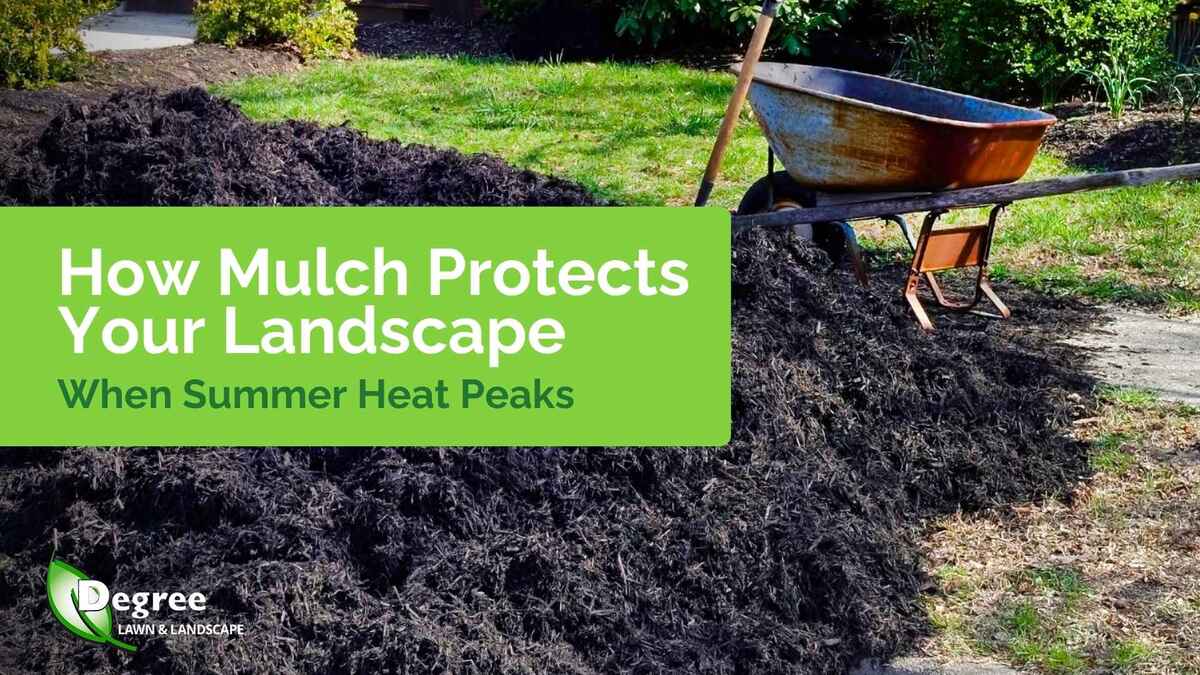
Mulch is one of the most overlooked elements in a summer landscape. Most homeowners install it in spring, admire the fresh look for a few weeks, and never think about it again until the following year.
Applying mulch in the spring sets up a layer of protection for your plants. That protection becomes critical in July and August, when soil temperatures climb, and rainfall becomes inconsistent.
This article explains how mulch regulates soil temperature, retains moisture, and suppresses weeds during peak summer heat.
Mulch Does More Work in Summer Than Any Other Season
You probably think of mulching as a spring cleanup task that ends once your beds look clean, and the edges are sharp. What you may not see is how hard your mulch is working during the hottest weeks of the year.
The same coverage that looked like a finishing touch in April is now keeping your plants cool, holding water in the soil, and stopping weeds before they start.
The Role Mulch Plays in Regulating Soil Temperature
Soil temperature has a direct effect on how well your plants do in summer. When the ground gets too hot, your plants struggle to drink water even when there is plenty around them.
What Happens Underground Without Mulch
Bare soil in direct sun can get 20 to 30 degrees hotter than mulched soil on the same day. That heat sinks into the ground and reaches the roots, where it makes it harder for your plants to take in water and nutrients.
When roots get too hot, they basically shut down. Watering will not help if the soil is too hot for your plants to use the water that is there. The damage often shows up as wilting or yellow leaves, which can look like a watering problem when the real issue is happening below the ground.
The Insulating Effect on the Root Zone
Two to three inches of mulch acts like a shield between the sun and the ground below it. The mulch soaks up heat at the surface and keeps the soil below much cooler than it would be on its own. That cooler soil is what helps your plants keep going through 95-degree stretches.
Mulch Is Your Best Defense Against Moisture Loss in Summer Beds
Watering alone cannot keep up with how fast moisture disappears during a heat wave. Mulch slows that loss and helps every drop of water reach the roots that need it.
Evaporation Rates in Mulched Versus Bare Soil
Bare soil in full sun loses water faster than most watering schedules can keep up with. On a hot afternoon, the top inch of bare soil can dry out within a few hours of watering.
Mulched beds hold water much longer because the covered soil stays cooler, and water evaporates more slowly. Your plants stay hydrated between watering cycles instead of getting stressed every time the ground dries out.
Why Watering Without Mulch Wastes Water
Water poured on bare soil in direct sun often evaporates before roots can soak it up. You end up paying for water that never reaches the plants you are trying to help.
Mulch makes every watering count. Beds with the right coverage need less water and hold moisture deeper in the soil where roots can actually use it. If you are on metered water, the difference shows up on your bill as well as in the health of your landscape.
The Most Effective Weed Control in Your Beds During Summer
Heat and moisture in summer create the perfect setup for weeds to take off. Mulch breaks that cycle at the surface before chemicals or hand-pulling ever come into play.
Light Deprivation and Germination
A mulch layer blocks sunlight from reaching weed seeds in your soil. Without light, most seeds cannot sprout no matter how much heat or moisture is around them. The problem starts where your coverage gets thin.
A small bare patch lets enough light through to wake up sleeping seeds, which is why even depth across your whole bed matters as much as the total amount of mulch you put down.
If you want to know how spring weed prevention and mulch work together, our post on pre-emergent weed control covers the chemical side of the equation.
Why Thin Mulch Loses the Battle by Mid-Summer
Mulch breaks down on its own over the season. A layer that started at three inches in April may be under two inches by July, right when weed pressure peaks across Southwest Ohio.
Two inches of mulch will keep most weeds out, but one inch lets enough sunlight through to give weeds a chance. A mid-summer top-off rebuilds that barrier and keeps your beds protected for the rest of the season.
Not All Mulch Performs the Same in Heat
The type of mulch you choose has a real effect on how well it holds up during a Southwest Ohio summer. Some options handle long stretches of heat much better than others.
Organic Mulch: Shredded Hardwood, Double-Ground, and Leaf Mulch
Shredded hardwood is one of the most reliable choices for summer. It holds water well, breaks down at a steady pace, and stays in place during heavy rain. Double-ground hardwood breaks down faster but gives you a cleaner, finer look earlier in the season. Leaf mulch breaks down the quickest of the three and adds the most nutrients back into your soil over time.
If you are deciding between organic mulch and stone-ground cover, our post on mulch versus rock walks through the tradeoffs.
Depth, Color, and Placement
Color affects how much heat your mulch soaks up at the surface. Darker mulch pulls in more heat and can warm the soil more than lighter options, which matters if you have heat-sensitive plants.
Depth matters more than how the mulch looks. Your bed can look freshly mulched and still fall short if the coverage is only an inch deep. Mulch piled right against trunks or stems traps moisture and can rot the base of your plants, so leaving a few inches of space around each one prevents that problem.
Keep Your Mulch Working All Summer with Degree Lawn & Landscape
The properties that come through the hottest weeks in the best shape are the ones with the right coverage at the right depth.
At Degree Lawn & Landscape, we treat mulch as a working part of your landscape rather than a finishing touch. Our team helps homeowners in West Chester, Mason, and Loveland pick the right material, put it down at the right depth, and keep coverage strong throughout the season.
Contact us to schedule mulch installation or a mid-summer top-off!