
The Homeowner's Guide to Low-Maintenance Summer Landscaping
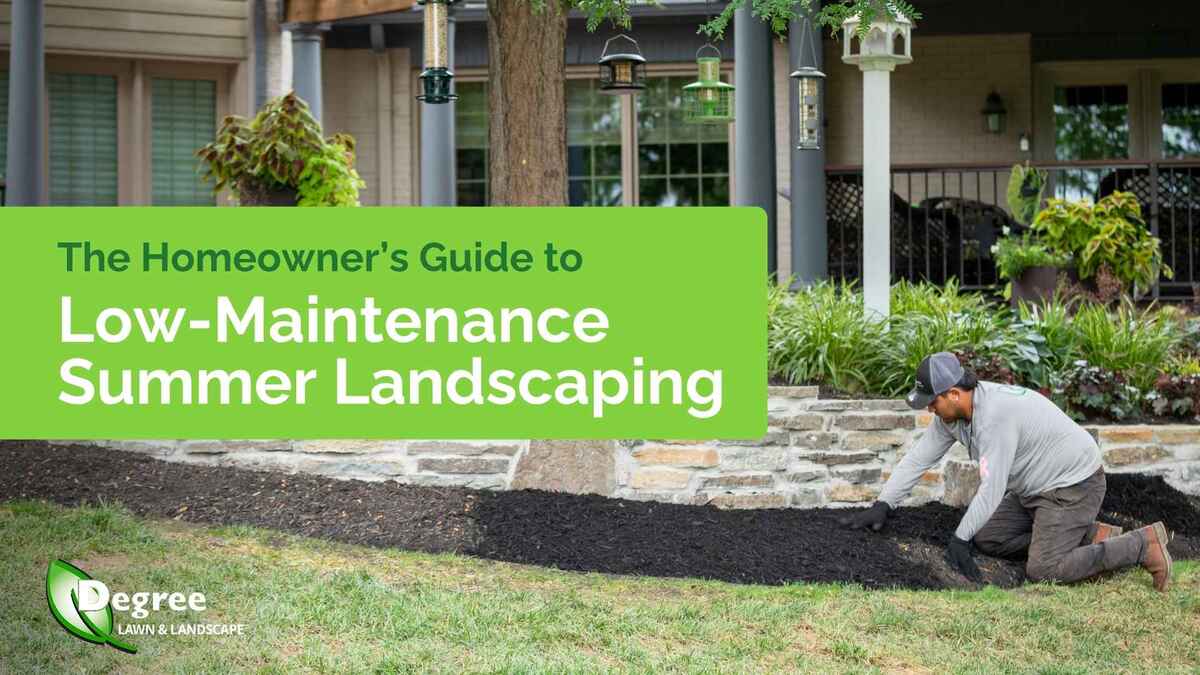
Tired of spending every Saturday maintaining your yard instead of enjoying it? Many homeowners fall into the same cycle. Mow on Saturday, weed on Sunday, water throughout the week, and repeat until August. Except, it's common for the yard to still look rough despite the effort.
The problem is often the landscape itself. Certain plants, bed designs, and turf decisions demand constant attention while others hold up through heat and storms with minimal work.
This article covers practical strategies for reducing summer maintenance. You will learn which plants thrive without extra care, how bed design affects your workload, and what turf decisions cut down on mowing and treatment.
Plants That Thrive in Summer Heat Without Extra Attention
The right plants reduce watering, pruning, and replacement. The wrong ones create a cycle of constant attention. Plant selection is one of the most important decisions in building a low-maintenance landscape.
Native and Adapted Plants for Southwest Ohio
Plants suited to local climate and soil conditions require less water, fewer treatments, and less intervention during summer heat. They have evolved to handle the conditions your yard already provides.
Native and adapted plants for Southwest Ohio include coneflower, black-eyed Susan, switchgrass, and little bluestem. These species tolerate drought, resist local pests, and return reliably year after year. Ornamental grasses and native shrubs like ninebark and arrowwood viburnum add structure without demanding weekly attention.
Choosing plants matched to your site conditions also means fewer replacements. A shade-loving plant installed in full sun will struggle no matter how much you water it. Working with your yard rather than against it reduces frustration and cost.
Perennials Over Annuals
Annuals provide color for a single season and then need to be replaced. Perennials return each year and fill in over time. A perennial-heavy design reduces both cost and labor.
The upfront investment in perennials pays off quickly. After the first year, established plants require less water and no replanting. Many perennials also spread gradually, filling gaps and reducing exposed soil where weeds take hold.
Annuals still have a place in containers or accent areas where seasonal color is the priority. But for the bulk of your planting beds, perennials deliver better long-term value with less ongoing work.
For readers considering adding trees to their landscape, see our guide on the best time to plant trees.
Bed Design That Stays Tidy with Less Effort
How planting beds are built and maintained determines how much work they demand through the summer. Good design reduces weeding, watering, and cleanup before problems start.
Mulch Depth and Coverage
Proper mulch depth suppresses weeds, retains moisture, and reduces the need for hand weeding. Two to three inches of mulch blocks light from reaching weed seeds while helping soil hold water between rainstorms.
A single spring application can carry beds through the summer with minimal touch-up. Hardwood mulch breaks down slowly and stays in place better than lighter materials. Replenishing mulch each spring maintains the barrier and keeps beds looking fresh.
For readers weighing ground cover options, see our comparison of mulch vs. rock.
Defined Edges That Hold Their Shape
Properly cut bed edges prevent grass from creeping into planting areas. Without a clean edge, turf sends runners into beds and creates a ragged border that requires constant trimming.
A sharp edge cut once in spring holds its shape for most of the season. Some homeowners add steel or aluminum edging for a permanent barrier that eliminates re-cutting entirely. Either approach reduces the time spent maintaining boundaries between turf and beds.
Spacing and Coverage
Beds designed with the right plant spacing fill in naturally and leave less exposed soil for weeds to take hold. Crowding plants too tightly creates competition for water and light. Spacing them too far apart leaves bare ground that invites weeds.
The goal is a balance between planting for immediate coverage and allowing room for mature growth. Plants that touch at maturity shade the soil beneath them, reducing weed pressure and moisture loss. A well-planned bed looks better and demands less attention as it matures.
Turf Strategies That Cut Down on Mowing and Treatment
A healthy lawn requires less intervention than a struggling one. A few strategic decisions reduce the time spent mowing, watering, and treating turf all summer.
Mowing Height and Frequency
Taller mowing heights promote deeper roots, retain moisture, and shade out weeds. Grass cut at three inches or higher develops a stronger root system than turf scalped to two inches or below.
Mowing less often at the right height produces better results than frequent low cuts. Removing more than one-third of the blade at a time stresses the plant and weakens the turf over time. Letting the lawn grow slightly taller between cuts reduces both mowing frequency and summer stress.
Reducing Turf in Problem Areas
Some sections of the yard will never support healthy turf. Shaded areas under trees, steep slopes, and hard-to-mow corners become recurring maintenance headaches.
Replacing turf in these problem areas with beds, groundcover, or hardscape eliminates the frustration. A shade garden under a mature tree requires far less effort than struggling grass.
A stone path through a steep slope looks intentional and removes the need for awkward mowing. Identifying these trouble spots and converting them saves hours of work every summer.
How Professional Maintenance Reduces Your Workload
A maintenance program handles the routine work, so homeowners can enjoy the yard instead of spending weekends managing it.
A typical summer maintenance plan includes mowing, edging, bed weeding, mulch touch-ups, and pruning as needed. Professional crews keep the landscape on track with consistent timing and proper technique. Problems get caught early before they require major intervention.
Handing off maintenance also means having the right equipment and expertise applied to your property. Crews know when to adjust mowing height, how to edge beds cleanly, and which plants need attention at which times. The result is a landscape that looks maintained without the homeowner doing the maintaining.
Build a Low-Maintenance Landscape with Degree Lawn & Landscape
At Degree Lawn & Landscape, we help homeowners across West Chester, Mason, and Loveland design and maintain landscapes that look great without demanding every weekend. Our team handles everything from plant selection and bed design to ongoing seasonal maintenance.
Contact us to schedule a consultation about simplifying your landscape. Ask about summer maintenance programs and spend your weekends enjoying your yard instead of working in it.