
Why Your Patio and Landscape Need Drainage Before Summer Storms
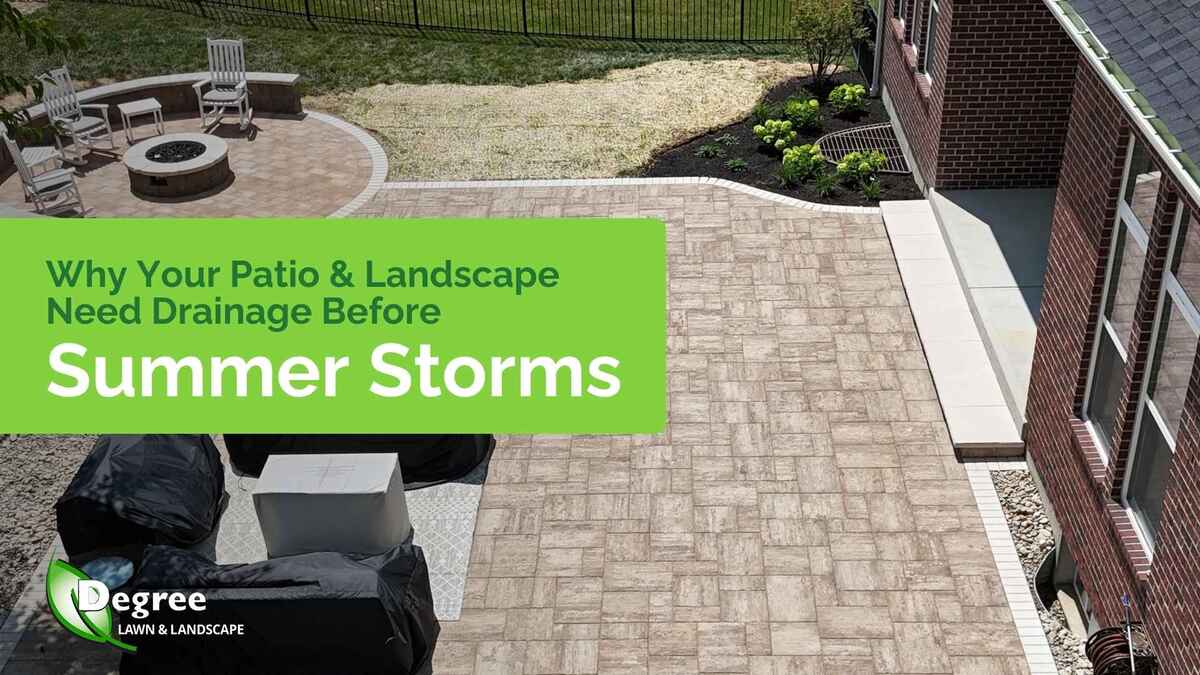
Summer storms in Southwest Ohio hit hard and fast. Properties without proper drainage pay the price in damaged patios, drowned plantings, and waterlogged turf. These problems compound with every storm.
Water erodes paver bases, suffocates root systems, and turns sections of your yard into mud. The longer drainage issues go unaddressed, the more expensive the repairs become.
This article explains how poor drainage damages your outdoor spaces, how to recognize warning signs before summer arrives, and what solutions protect your investment.
What Happens to Your Yard During a Heavy Summer Storm
A single summer storm can drop two inches of rain in under an hour. Unlike steady spring rain that soaks in gradually, summer downpours overwhelm the soil's ability to absorb moisture. Water has to go somewhere.
How your property handles that water depends entirely on grading and drainage. A well-designed system moves water away from structures and prevents pooling. Without it, water collects in low spots, flows toward your foundation, and sits on surfaces where it causes damage.
Summer storms expose drainage issues that lighter spring rain may not reveal. A yard that seemed fine in April can turn into a swamp in July.
How Poor Drainage Damages Your Patio
Patios and walkways handle daily use without issue, but water that has nowhere to go undermines even the best installation over time. Patios, walkways, and outdoor living spaces all suffer when drainage fails.
Erosion Under and Around Pavers
Water flowing across or pooling on a patio washes away the base material and joint sand that keep pavers stable. Each storm removes a little more. Over time, this leads to shifting, settling, and uneven surfaces.
Once the base erodes, pavers lose their support. You end up with lips and gaps that create tripping hazards and detract from the appearance of your outdoor space.
Standing Water on Hardscape Surfaces
Pooling on a patio signals a grading issue. Water should drain off the surface, not collect on it.
Standing water accelerates wear on pavers and mortar joints. It also affects surrounding structures like seat walls and fire pits. Repeated wet-dry cycles break down materials faster than normal use ever would.
How Poor Drainage Damages Your Landscape
Plantings, turf, and bed structures all suffer when water sits too long or flows too fast through the wrong areas. Drainage problems do not stay in one place. They spread damage across your entire yard.
Root Damage and Plant Loss
Saturated soil suffocates root systems. Roots need oxygen to function, and waterlogged soil cuts off that supply. Plants decline slowly at first, then fail entirely.
Trees, shrubs, and perennials that survived spring may struggle in summer when storm intensity increases. A plant that tolerated occasional wet conditions cannot handle repeated flooding.
Mulch Washout and Bed Erosion
Heavy rain displaces mulch, exposes root systems, and carves channels through planting beds. You lose the mulch you paid for and the protection it provides.
Repeated washout degrades bed structure over time. Soil compacts, edges break down, and plantings become vulnerable to heat and drought stress once the water finally drains.
Turf Damage and Soggy Spots
Standing water kills grass. Roots rot in saturated soil, leaving bare patches that turn into mud. Sections of the yard become unusable.
Even after the water drains, damaged turf takes weeks to recover. In many cases, reseeding or resodding is the only fix. For more on how summer conditions affect turf health, see our guide on how heat drains your yard's health.
4 Warning Signs That Your Property Has a Drainage Problem
Recognizing issues early gives you time to address them before summer storms make the damage worse.
- Water pooling near the foundation after storms. This puts your home at risk for moisture damage, basement leaks, and structural issues. Water should always drain away from the house.
- Soggy areas that stay wet for days after rain stops. If sections of your yard remain saturated long after a storm passes, grading is directing water into those spots rather than away from them.
- Erosion along slopes or through planting beds. Water carving paths through your landscape indicates concentrated flow rather than even drainage. These channels deepen with every storm.
- Downspouts dumping water into problem areas. Rooflines collect a significant amount of water during storms. If downspouts deposit that water against the house, patio, or walkways, the problem compounds quickly.
Drainage Solutions That Protect Your Investment
Several solutions address different types of drainage problems. The right approach depends on where water collects and how it moves across your property.
French Drains
French drains redirect subsurface water away from patios, foundations, and low-lying landscape areas.
A perforated pipe set in gravel collects water below the surface and carries it to a safe discharge point. This solution works well for areas where water seeps up from below rather than flowing across the surface.
Grading and Regrading
Adjusting the slope of the yard controls surface water flow. Proper grading directs water away from structures and prevents pooling near patios and planting beds.
Regrading can solve problems that no amount of pipe or channel work will fix. Sometimes the issue is simply that the land tilts in the wrong direction.
Channel Drains and Downspout Extensions
Channel drains manage water at specific collection points like patio edges. They intercept runoff before it reaches problem areas and directs it into a drainage system.
Downspout extensions carry roof runoff away from the foundation. This simple addition prevents water from pooling against the house or flooding nearby planting beds. For a broader look at how drainage fits into overall landscape design, see our article on why drainage should be part of your landscape planning.
Solve Drainage Problems Before the Next Storm with Degree Lawn & Landscape
Drainage issues don’t improve on their own. Each storm adds to the damage and increases the cost of repair.
At Degree Lawn & Landscape, we design and install drainage solutions that protect your patio, plantings, and turf from storm damage. Our team works with homeowners across West Chester, Mason, and Loveland to assess problem areas and build systems that handle heavy rain without compromising your landscape.
Contact us to schedule a drainage assessment. Ask about French drains, regrading, and downspout solutions. Protect your investment before the next storm hits.